SAS-PSA Project
In order to achieve the goals of SDGs in the region, the project will develop data for agricultural productivity improvement and promotion of sustainable agriculture and use as basic data for policy making. Strengthening the ASEAN Food Security Information System (AFSIS) activities which contribute to monitoring the food security situation throughout the ASEAN region for providing accurate and comparable agricultural statistics data collected using a unified survey method developed by the project.
Sustainable Development Goals
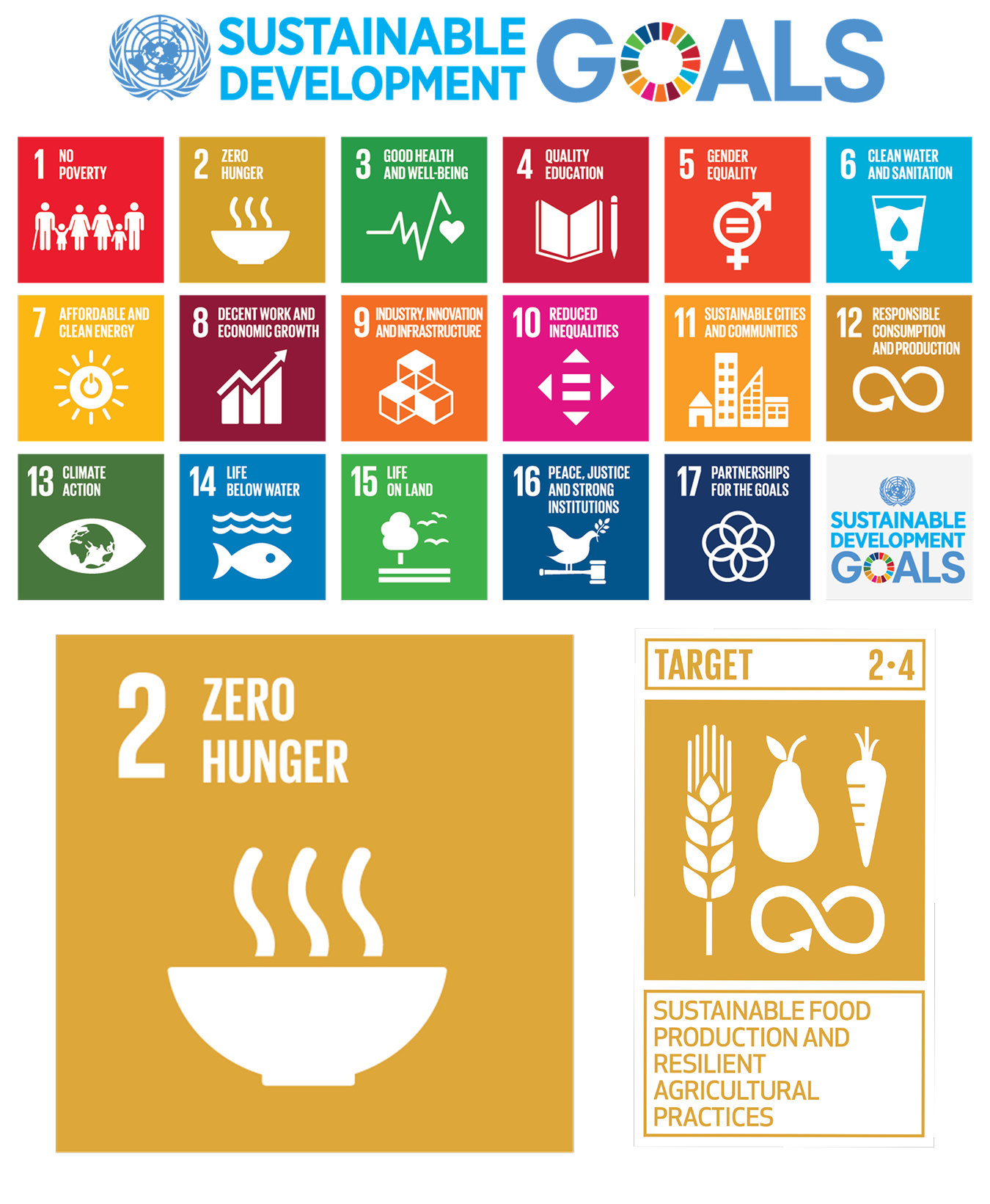 Source : Food and Agriculture Organization of the United
Nations (FAO)
The 2030 Agenda for Sustainable Development,
adopted by all United Nations Member States in 2015, provides a
shared blueprint for peace and prosperity for people and the
planet, now and into the future. At its heart are the 17
Sustainable Development Goals (SDGs), which are an urgent call
for action by all countries - developed and developing - in a
global partnership. They recognize that ending poverty and other
deprivations must go hand-in-hand with strategies that improve
health and education, reduce inequality, and spur economic
growth – all while tackling climate change and working to
preserve our oceans and forests.
Target 2.4
By 2030, ensure sustainable food production systems and
implement resilient agricultural practices that increase
productivity and production, that help maintain ecosystems, that
strengthen capacity for adaptation to climate change, extreme
weather, drought, flooding and other disasters and that
progressively improve land and soil quality.
Indicator 2.4.1 - Proportion of agricultural area under
productive and sustainable agriculture
The area under productive and sustainable agriculture captures
the three dimensions of sustainable production: environmental,
economic and social. The measurement instrument - farm surveys -
will give countries the flexibility to identify priorities and
challenges within the three dimensions of sustainability. Land
under productive and sustainable agriculture will be those farms
and associated agricultural land area that satisfy the
sustainability criteria of the sub-indicators selected across
all three dimensions. This indicator will measure progress
towards SDG Target 2.4.
For manuals and tools of SDG indicator 2.4.1
The Project for Supporting Agricultural Survey on Promoting
Sustainable Agriculture in ASEAN Region (SAS-PSA)
The Project for Supporting Agricultural Survey on Promoting
Sustainable Agriculture in ASEAN Region (SAS-PSA) funded by the
Ministry of Agriculture Forestry and Fisheries of Japan (MAFF, Japan)
and ASEAN Food Security Information System (AFSIS) Secretariat will be
responsible for the implementation of the project with the main
purpose of supporting and promoting sustainable agriculture on SDG
indicator 2.4.1.
Main objectives
- To achieve the goals of SDGs in the region by developing data
for agricultural productivity improvement and promotion of
sustainable agriculture and use as basic data for policy making - To strengthen the AFSIS activities which contribute to
monitoring the food security situation throughout the ASEAN
region for providing accurate and comparable agricultural
statistics data collected using a unified survey method
developed by the project
Activities
- To develop appropriate survey method for collecting data related
to SDG indicator 2.4.1.- Selecting of three target countries
- Considering and making development plan for survey method to
introduce into ASEAN region - Validating the designed method and process for data collection
for the project by counterpart
- To conduct pilot survey in target country
- Preparing survey material
- Conducting training workshop
- Conducting pilot survey
- Holding country workshops
- To share experiences from target countries with all ASEAN
members- Preparing regional workshop
- Conducting regional workshop
- Project evaluation
- To publish results on new survey through AFSIS
- Rebuilding of the AFSIS database and which also make it
publicly available - Considering sustainability in point of partnership and linkage
this database with other existing platforms for regular update
data
- Rebuilding of the AFSIS database and which also make it